By Mike Kocsis | 7 minutes read | Last updated: July 30, 2025 Categories: Hormone imbalance Menopause
Medically Reviewed by Dr. George Touliatos
Ageing is a natural process that all of us must undergo at a certain time and pace.
As you age, you experience several changes in your skin, including the formation of wrinkles, skin dryness, and the appearance of age spots.
These changes are inevitable, but the good thing is you can still reduce or reverse them.
Many age-related changes occur due to the reduced production of hormones. Therefore, you can reverse some ageing signs by replacing the hormones your body can no longer make.
Hormone replacement therapy (HRT) is one such treatment option that restores the levels of estrogen and progesterone. Thus, it may help in making you look younger and reducing skin ageing and other age-related problems.
Understanding the Natural Ageing Process of Skin
Your skin – a type of connective tissue – keeps changing with age due to external as well as internal factors. These changes become more prominent as you grow older, and they reflect ageing.
Skin ageing can be intrinsic ageing, photoaging, and hormonal ageing.
Intrinsic ageing is due to genetic factors and age. Photoaging results from exposure to sunlight, and hormonal ageing is due to the fluctuations or deficiency of hormones.
Skin ageing starts when muscles underneath your skin become weak and less supportive.
Subcutaneous fat present in the hypodermis (the deepest skin layer) may also shift, leading to sunken cheeks.
Production of structural proteins like elastin and collagen also declines. As a result, your skin loses its elasticity and structure. It fails to counteract the effects of gravity and sags down.
Oil and sweat glands present in the dermis (middle layer of the skin) also reduce in number, which makes your skin drier.
Blood vessels become very fragile. You bruise very easily and heal very slowly due to the slow production of new cells.
With age, the levels of hormones like estrogen and progesterone also decline. Both help the skin in maintaining its function and structure.
A reduction in their production has a negative influence on skin health. Therefore, some people go for hormone replacement therapy (HRT) that replenishes these hormones and helps reverse low hormone or menopause symptoms.
Estrogen and Skin Ageing
Estrogen plays several important roles, and one of them is maintaining your skin’s function and structure.
It regulates the immune system and helps with wound healing. Pregnant women who produce more estrogen than other women notice an improvement in inflammatory skin problems. It may also provide protection against skin cancer and photoaging.
Estrogen promotes sebum secretion and maintains skin moisture. It is also associated with skin thickness and skin collagen synthesis.
All in all, it reduces skin wrinkles, maintains hydration, and keeps the skin healthy.
As women age, estrogen production starts declining in their bodies, and estrogen reaches its lowest amount when they hit menopause.
That is why a lot of early postmenopausal women notice a sudden increase in ageing signs like fragile skin, skin thinning, etc., after a few months of menopause.
Effects of low estrogen on skin
Estrogen-deficient skin turns into dry and wrinkly skin. Wounds and bruises take more time to heal. Skin gets thin and saggy.
If skin ageing is due to estrogen deficiency, then restoring the concentration of estrogen through treatments like HRT could be a suitable choice.
Progesterone and Skin Health
Like estrogen, progesterone has been shown to improve skin health, hydration and elasticity. It can prevent and reverse skin ageing signs.
When women reach menopause, their bodies produce very little progesterone.
Effects of low progesterone on skin
Due to the decrease in progesterone levels, several changes occur in the body, including the formation of wrinkles and age spots.
It can also lead to increased dryness, reduced elasticity, slower healing and more breakouts.
You can restore the deficiency of estrogen and progesterone hormones with the help of HRT which may also improve your skin.
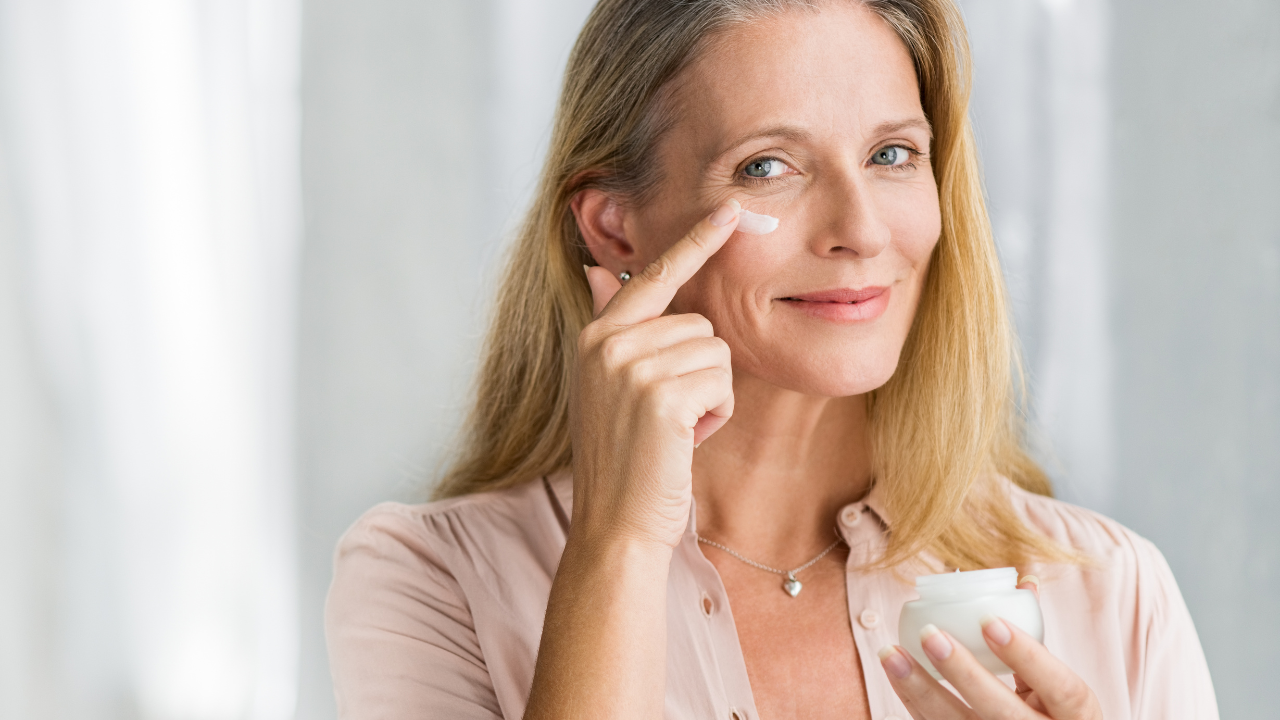
The Connection between Hormone Replacement Therapy and Skin Ageing
Hormone replacement therapy (HRT) or estrogen replacement therapy (ERT) has become an advanced anti-ageing treatment.
HRT restores the hormone estrange (and sometimes progesterone as needed) that your body has stopped producing. This way, it reverses the effects of the deficiency of those hormones, including skin sagginess, dryness and wrinkles severity.
Despite HRT’s positive effects on skin, you should know that HRT is not a cosmetic treatment. It is a medical therapy with potential risks such as blood clots and breast cancer or uterine cancer in some cases.
Hence, it is important to consider both the pros and cons of HRT for your particular case before deciding on whether it is safe to go for it.
Latest Studies on Effects of HRT on Skin
A 2023 article published in the Journal of Menopausal Medicine reviewed 15 controlled studies including 1,589 menopausal women.
It concluded a significant improvement in skin elasticity, wrinkles severity, skin thickness, skin collagen content and skin dryness in menopausal women who had hormone therapy.
Similarly, another 2024 study examined the effects of skin irritants on the skin of 18 postmenopausal women.
Researchers concluded that women on HRT had stronger facial skin that repaired itself better after skin irritation. Their skin barrier worked better than postmenopausal women who did not receive HRT. Their immune system in the skin was also more responsive.
Benefits of HRT for Skin
HRT alleviates symptoms such as skin dryness and fine lines, and reverses other age-related changes like bone loss, a decline in the function of the nervous system, etc.
HRT supports your skin from the inside. It boosts the production of dermal collagen, and your skin starts gaining its elasticity back.
Your skin starts retaining moisture, which gives it a fresh and plump look.
Studies also prove that women who have hormonal replacement therapy have healthier and younger skin compared to those who have never had this treatment.
Rather than worrying about your wrinkles and skin health, talk to a doctor about estrogen therapy and its relation with your skin.
This treatment can help you reverse the ageing clock and have younger skin if your skin is suffering due to a hormonal imbalance or deficiency.
How Long Does It Take for HRT to Improve Skin?
The timeline for HRT results varies from person to person, depending on the type of HRT, medication dosage, the age it is started and your genetics.
A 2022 study conducted on transgender women reveals that estrogen helped improve their skin firmness, elasticity, hydration and softness in 3 to 6 months.
In most cases, you might notice early changes such as better skin moisture within a few months. But more noticeable results, like fewer wrinkles, usually take up to a year or more to appear.
Similarly, topical hormone therapy may be more effective than oral hormone replacement therapy. So, consider all HRT options carefully before choosing one.
Natural Ways to Protect Your Ageing Skin
HRT is an effective treatment, but it may not be suitable for all. There are other ways that can assist you in protecting your ageing skin.
Some of the most common ways include:
Hydrate Your Skin
Water is a huge blessing of nature. Take full advantage of it and drink plenty of water every day. It will keep your skin supple, fresh, and moisturised.
As we age, our oil glands (also called sebaceous glands) become less and less active. It makes ageing skin dry and itchy. You can reverse this effect through higher water consumption.
Dietary sources also provide enough water. So, eat a sufficient amount of fresh fruits and vegetables. They will provide the needed minerals, vitamins, and water. You can also apply moisturising lotions or creams to reduce skin dryness.
Use a Sunscreen
Around 90% of skin ageing occurs due to the sun. You can protect your skin from the damaging effects of the sun by using sunscreen.
People who apply sunscreen daily have 24% less skin ageing compared to those who do not apply sunscreen when needed.
Eat a Nutrient-Rich Diet
What you eat has a great impact on your skin’s health.
The protein and healthy fatty acids (olive oil, almond oil, etc.) taken through food provide the building blocks for skin tissue. They boost the production of elastin and collagen protein and help the skin restore its structure.
A healthy diet also provides anti-ageing ingredients like vitamins and antioxidants. They reduce the damaging effects of oxidative stress by repairing the skin.
Exercise Regularly
Exercise is a great stress-reliever. Stress has a negative influence on your skin and can cause early ageing. You can release stress and protect your skin from its damaging effects by exercising regularly.
Exercise can also boost blood circulation which naturally reduces as we age and make your skin look brighter and healthier.
Keep Your Facial Muscles Relaxed
Facial movements like squinting can speed up the wrinkle formation process. Therefore, try to keep your facial muscles as relaxed as possible. If you think you have been squinting a lot, you may need to get your eyesight checked by a doctor.
Take Rest
Sleep at least 8 hours a day. Your body restores itself during sleep. Blood circulation increases, and skin damage caused by UV exposure gets repaired.
So, sleep deprivation can accelerate intrinsic ageing by negatively affecting the skin healing process or cutaneous wound healing.
FAQs about HRT and Skin Health
Is HRT for anti-ageing?
While HRT can help reverse many ageing-related effects, it is not an anti-ageing treatment. Rather it is given to women suffering from menopausal symptoms or low estrogen symptoms such as hot flashes, night sweats, vaginal dryness and more.
Can HRT reverse skin sagging?
HRT does not completely reverse skin laxity. But clinical trials and studies report increased skin rigidity among consistent HRT users.
So, HRT can help with skin elasticity and skin rigidity by improving skin collagen levels and skin hydration.
Can HRT cause skin problems?
HRT may cause hormonal acne by increasing skin oiliness in some individuals. However, it is temporary and manageable.
Does HRT improve skin elasticity?
Yes, HRT may help improve human skin elasticity by increasing collagen – a protein that provides strength, support and structure to your skin.
Does HRT change your face?
Yes, it does. HRT makes your face look more feminine, hydrated, younger and fresher.
So, Does HRT Make You Look Younger?
There is no denying that estrogen and progesterone exert different beneficial effects on the skin.
Reduction in their levels due to old age or other reasons has a detrimental effect on skin health.
You can correct this damaging effect by restoring estrogen and progesterone levels with the help of HRT.
This treatment can help you look younger by improving your overall skin health. Besides that, it may also make you feel younger as well by reducing other age-related issues like bone loss, etc.
Contact Balance My Hormones today to learn more about HRT and how we can help you improve your low hormone signs with customised HRT solutions.
References
Kiss, O., Bahri, R., Watson, R.E., Chike, C., Langton, A.K., Newton, V.L., Bell, M., Griffiths, C.E., Bulfone-Paus, S. and Pilkington, S.M., 2024. The impact of irritant challenge on the skin barrier and myeloid-resident immune cells in women who are postmenopausal is modulated by hormone replacement therapy. British Journal of Dermatology, 191(5), pp.746-759.
Pivazyan, L., Avetisyan, J., Loshkareva, M. and Abdurakhmanova, A., 2023. Skin rejuvenation in women using menopausal hormone therapy: a systematic review and meta-analysis. Journal of Menopausal Medicine, 29(3), p.97.
Thornton, M.J., 2013. Estrogens and aging skin. Dermato-endocrinology, 5(2), pp.264-270.
Evidence Based Research
This article has been researched and written based on scientific evidence and fact sheets that have then been crossed checked by our team of doctors and subject matter experts.
References, sources and studies used alongside our own in-house research have been cited below, most of which contain external clickable links to reviewed scientific paper that contain date stamped evidence.
Our team of healthcare experts and GMC registered doctors are licensed to UK GMC standards. We strive to provide you with the latest evidence based, researched articles that are unbiased, honest and provide you with accurate insights, statistics and helpful information on the discussed topic to ensure you gain a better understanding of the subject. You can read more about our Editorial Process by clicking here.
We value your feedback on our articles, if you have a well-researched paper you would like to share with us please contact us.
Quick Low Testosterone Test
If you know your total testosterone reading from a previous blood test input the results to the left above to see if your testosterone levels are normal.
Low Testosterone Levels
You may have low testosterone depending on the symptoms you have, please contact us to find out how we can help.
Please Retry
The Total Testosterone Level You Entered Is Incorrect. Figure Must be in nmol/L you can use our converter here.
Normal Testosterone Levels
Your testosterone levels appear to be in the normal range.
LOOKING GOOD!
You must be over 38, have had your ovaries removed or have suffered with premature menopause to warrant further hormone tests.
Further investigation needed
Please contact us to discuss your hormones, we need your total testosterone levels to validate your hormone deficiency. You can order a blood test here.
Low Testosterone Levels
You may have low testosterone depending on the symptoms you have, please contact us to find out how we can help.
High Testosterone Levels
You appear to have higher than normal testosterone levels, please contact us for further investigation.
Normal Testosterone Levels
You appear to have normal testosterone levels. Contact us if you have any concerns.
About the Author: Mike Kocsis
 Mike Kocsis has an MBA with a focus on healthcare administration and is an entrepreneur and medical case manager for Balance My Hormones which offers medical services in the UK and Europe. Mike has over 25 years of experience in the healthcare sector, much of that working with people who have hormone imbalances. Mike has appeared on podcasts and radio and is an expert speaker on the subject of hormone imbalance. He specialises in Testosterone Replacement Therapy and Hormone Replacement Therapy (HRT) and with his first-hand experience he has helped thousands of people suffering from low testosterone recover and regain control of their lives. You can follow him on LinkedIn and on the Balance My Hormones YouTube Channel.
Last update: July 30th, 2025