By Mike Kocsis | 3 minutes read | Last updated: July 17, 2026 Categories: Hormone imbalance Testosterone
Medically Reviewed by Dr. George Touliatos
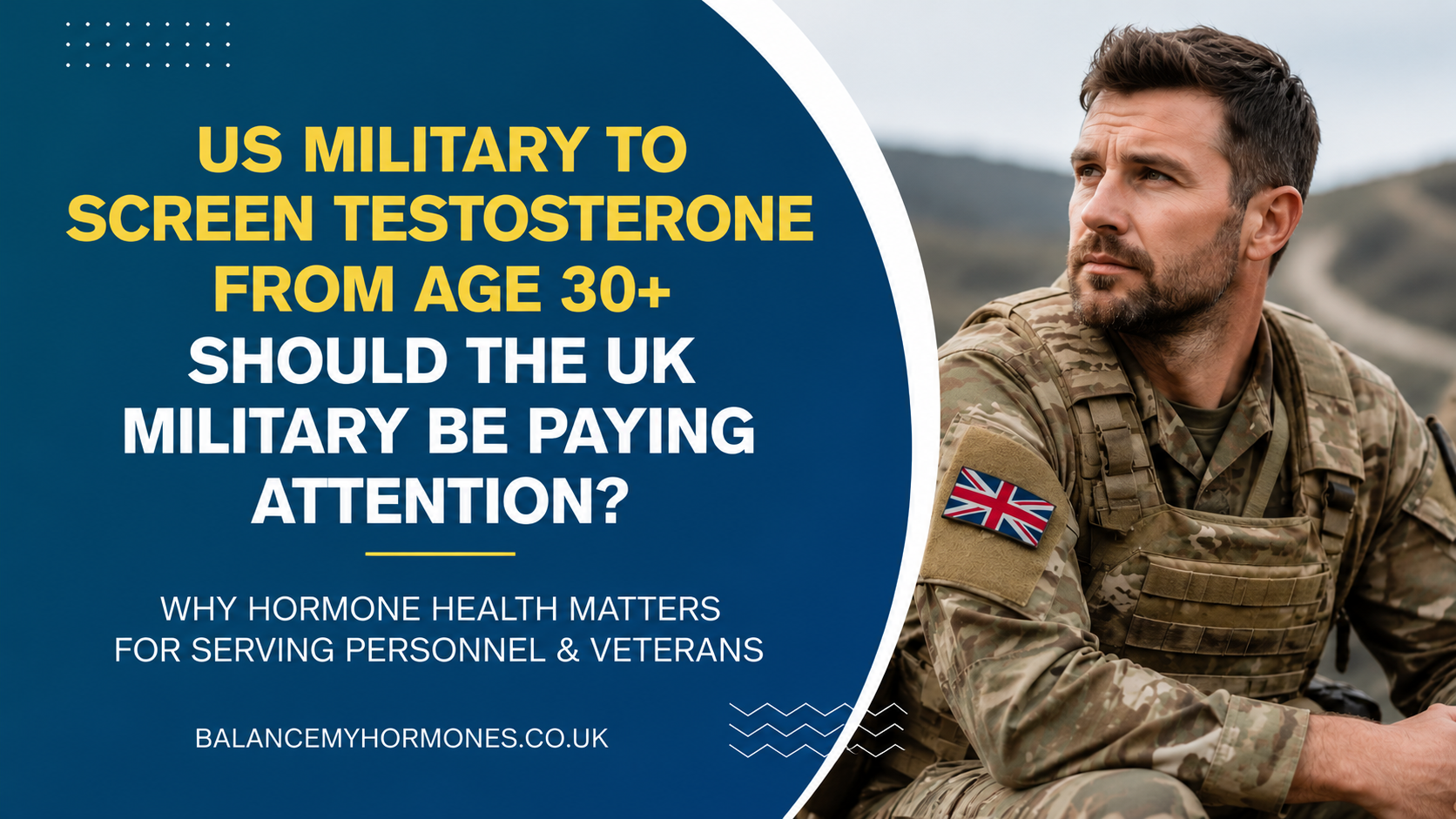
The US Military Is Looking at Testosterone Screening. Should the UK Be Paying Attention?
If one of the world’s largest and most capable military organisations believes testosterone is important enough to monitor, perhaps it’s time we started talking more openly about it here in the UK.
Recent reports suggest that US Defence Secretary Pete Hegseth plans to introduce routine testosterone screening for military personnel aged 30 and over as part of annual health assessments. The objective is clear: ensure service members are physically and mentally equipped to perform at their best.
Whether a similar initiative will ever be adopted by the Ministry of Defence remains to be seen. But it does raise an important question for serving personnel, reservists and veterans alike.
When was the last time you thought about your own hormone health?
The Hidden Cost of Military Service
Military life places unique demands on the body.
Years of physically demanding training, operational deployments, disrupted sleep, shift work, prolonged periods of stress and recovery from injury all take their toll. While these challenges are accepted as part of service, many people don’t realise they can also influence hormone health over time.
Testosterone is often associated with muscle mass and libido, but its role extends far beyond that. It helps support energy levels, cognitive function, mood, recovery, bone health and overall physical performance.
When testosterone levels fall below the normal range, the effects can be subtle at first. A lack of motivation and feeling unusually tired despite getting enough sleep. Longer recovery after exercise. Difficulty concentrating. A gradual loss of strength or changes in body composition.
For many men, these symptoms creep up so slowly that they’re simply written off as getting older or adjusting to life after service.
Not Every Symptom Is Low Testosterone
Experiencing fatigue or reduced performance doesn’t automatically mean you have testosterone deficiency. Many conditions can cause similar symptoms, from poor sleep and nutritional deficiencies to thyroid disorders or mental health challenges.
That’s why getting a testosterone test is so important.
Rather than relying on guesswork or social media advice, a comprehensive hormone assessment provides objective information that can help determine whether testosterone—or another underlying issue—may be contributing to the way you’re feeling.
If your testosterone levels are normal, that’s valuable information too. If they aren’t, you can have an informed conversation with an experienced clinician about the most appropriate next steps.
Why This Matters Beyond Elite Soldiers
It’s easy to assume that discussions around testosterone only apply to special forces or elite athletes.
In reality, hormone health matters just as much for the engineer, medic, infantry soldier, Royal Marine, RAF technician or Royal Navy sailor balancing the demands of service alongside family life.
The same applies after leaving the Armed Forces.
Many veterans continue to lead active, demanding lives while feeling tired all the time and attribute it to ageing. Yet some discover that an underlying hormone imbalance has been contributing to those changes all along.
The important point isn’t that everyone needs treatment. It’s that everyone deserves the opportunity to understand what’s happening with their health.
Could You Be Missing the Signs?
If you’ve noticed persistent symptoms such as:
- Ongoing fatigue
- Reduced motivation
- Lower sex drive
- Brain fog or poor concentration
- Loss of muscle strength
- Increased body fat
- Slower recovery after exercise
- Low mood or reduced confidence
it’s worth asking whether your hormones could be playing a role.
The first step doesn’t have to be booking a blood test.
At Balance My Hormones, we’ve developed a FREE Hormone Imbalance Quiz designed to help identify whether your symptoms are consistent with low testosterone or another hormonal imbalance.
It takes just a few minutes to complete and can help you decide whether further investigation may be worthwhile.
A Thank You to Those Who Serve
Everyone at Balance My Hormones has enormous respect for the commitment and sacrifices made by members of the Armed Forces and the veteran community.
As a small way of saying thank you, we’re pleased to offer 10% off our hormone blood testing packages and clinical services to serving members of the UK Armed Forces and military veterans.
Simply let our team know when booking and provide a valid military ID or proof of service to qualify.
Looking After Yourself Is Part of Staying Mission Ready
The US military’s reported decision to include testosterone screening reflects a growing understanding that long-term performance depends on more than physical fitness alone.
Hormone health is just one part of the wider picture, but it’s a part that often goes overlooked.
Whether you’re currently serving, preparing to leave the military or have been a veteran for many years, understanding your health is never a sign of weakness. It’s a proactive step towards performing at your best—both professionally and personally.
If you’ve been wondering why you don’t quite feel like yourself anymore, don’t ignore it.
Start by taking our FREE Hormone Imbalance Quiz. It could be the first step towards understanding what’s really going on.
Evidence Based Research
This article has been researched and written based on scientific evidence and fact sheets that have then been crossed checked by our team of doctors and subject matter experts.
References, sources and studies used alongside our own in-house research have been cited below, most of which contain external clickable links to reviewed scientific paper that contain date stamped evidence.
Our team of healthcare experts and GMC registered doctors are licensed to UK GMC standards. We strive to provide you with the latest evidence based, researched articles that are unbiased, honest and provide you with accurate insights, statistics and helpful information on the discussed topic to ensure you gain a better understanding of the subject. You can read more about our Editorial Process by clicking here.
We value your feedback on our articles, if you have a well-researched paper you would like to share with us please contact us.
Quick Low Testosterone Test
If you know your total testosterone reading from a previous blood test input the results to the left above to see if your testosterone levels are normal.
Low Testosterone Levels
You may have low testosterone depending on the symptoms you have, please contact us to find out how we can help.
Please Retry
The Total Testosterone Level You Entered Is Incorrect. Figure Must be in nmol/L you can use our converter here.
Normal Testosterone Levels
Your testosterone levels appear to be in the normal range.
LOOKING GOOD!
You must be over 38, have had your ovaries removed or have suffered with premature menopause to warrant further hormone tests.
Further investigation needed
Please contact us to discuss your hormones, we need your total testosterone levels to validate your hormone deficiency. You can order a blood test here.
Low Testosterone Levels
You may have low testosterone depending on the symptoms you have, please contact us to find out how we can help.
High Testosterone Levels
You appear to have higher than normal testosterone levels, please contact us for further investigation.
Normal Testosterone Levels
You appear to have normal testosterone levels. Contact us if you have any concerns.
About the Author: Mike Kocsis
 Mike Kocsis has an MBA with a focus on healthcare administration and is an entrepreneur and medical case manager for Balance My Hormones which offers medical services in the UK and Europe. Mike has over 25 years of experience in the healthcare sector, much of that working with people who have hormone imbalances. Mike has appeared on podcasts and radio and is an expert speaker on the subject of hormone imbalance. He specialises in Testosterone Replacement Therapy and Hormone Replacement Therapy (HRT) and with his first-hand experience he has helped thousands of people suffering from low testosterone recover and regain control of their lives. You can follow him on LinkedIn and on the Balance My Hormones YouTube Channel.
Last update: July 17th, 2026