By Mike Kocsis | 7 minutes read | Last updated: November 7, 2026 Categories: Uncategorized
Medically Reviewed by Dr. George Touliatos
Peptides, which are short chains of amino acids, are often seen as a shortcut to muscle growth and better muscular performance. But the truth is, many peptides marketed for these benefits have little scientific evidence to back up the claims.
Muscle-building peptides are categorised into multiple types based on how they affect the body. Growth hormone-releasing peptides, such as ipamorelin, stimulate growth hormone release, while GHRH analogues, such as CJC-1295, act on related hormonal pathways.
Learn about common types of peptides, their potential benefits, side effects and more to ensure you make the right choice about them.
Meet Our Doctors
Meet our Doctors


While peptides are often discussed in relation to muscle growth, testosterone also plays an important role in muscle development. If you have concerns regarding low testosterone, talk to our doctors to assess your testosterone levels and see if TRT is right for you.
What are the peptides for muscle growth?
As the name indicates, muscle-building peptides are molecules that support biological processes involved in muscle growth.
Several of these peptides occur naturally within the human body, while the ones marketed for bodybuilding are synthesised in laboratories to mimic the action of natural compounds.
For instance, your body naturally produces growth hormone-releasing hormone (GHRH) that stimulates human growth hormone (HGH) production. CJC-1295 is its synthetic analogue that acts on the same signalling system.
To date, evidence that taking synthetic peptides actually improves muscle size, strength or recovery in healthy people remains limited. Present data show mixed results, which is why most healthcare professionals warn people to steer clear of these unregulated compounds.
What do peptides do for muscles?
Peptides for muscle growth may influence multiple muscle-supporting pathways involving:
- Muscle protein synthesis: Some peptides may influence human growth hormone (HGH) and insulin-like growth factor 1 (IGF-1) signalling pathways. They are involved in muscle protein metabolism.
- Muscle tissue repair: Peptides like BPC-157 may have a potential role in tissue repair and cellular recovery.
- Fat metabolism: Growth hormone is involved in lipolysis (breakdown of stored fats). Peptides that stimulate HGH production may help with fat metabolism or fat loss.
- Maintain muscle mass: Some experimental peptides may support muscle cell growth and muscle protein synthesis.
Important: These are biological roles or proposed uses, not guaranteed effects of peptide products.
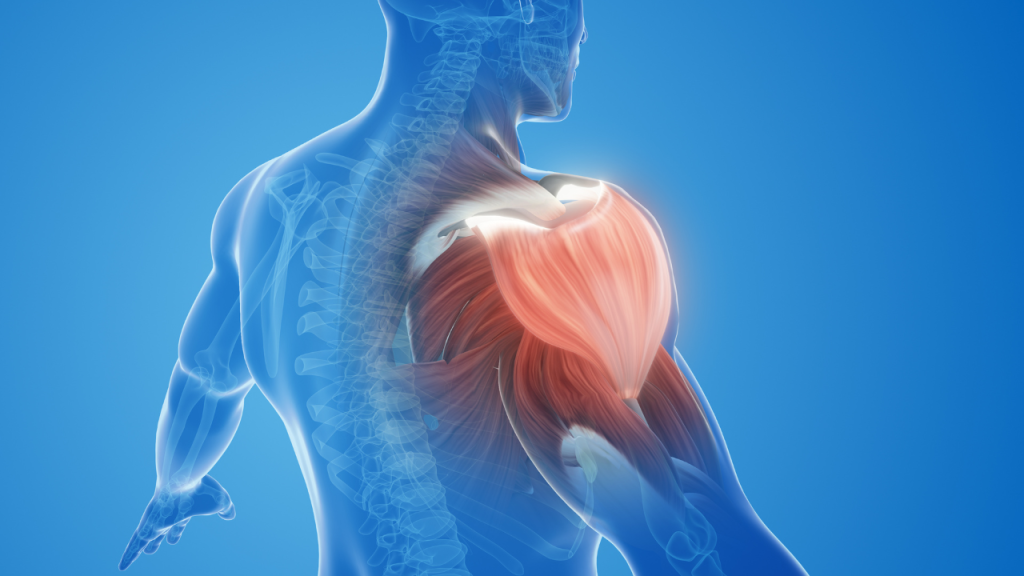
How do peptides work for muscle growth and recovery: The actual mechanism
Different peptides work through different mechanisms.
Some are known as growth hormone secretagogues, which include growth hormone-releasing hormone (GHRH) analogues and growth hormone-releasing peptides (GHRPs).
They activate receptors in the pituitary gland and hypothalamus to stimulate growth hormone release in a pulsatile manner (its natural pattern of secretion).
Some experimental peptides are being studied for their possible role in directly repairing damaged tissue. They may help coordinate multiple natural tissue-repair activities.
Types of growth peptides
Experimental peptides are divided into various types based on their roles:
Growth hormone-releasing hormone (GHRH) analogue
These peptides copy the action of natural GHRH by binding to GHRH receptors on cells in the anterior pituitary gland, stimulating the release of HGH.
Unlike injecting HGH directly into the bloodstream, these peptides stimulate the body’s natural pulsatile release of growth hormone.
Sermorelin, tesamorelin and CJC-1295 are popular examples of GHRH analogues.
Growth hormone-releasing peptides (GHRPs)
These peptides act on ghrelin receptors to make pituitary release stored growth hormone. Common examples include Ipamorelin, GHRP-2 and GHRP-6.
Insulin-like growth factor-1 (IGF-1) analogues
IGF-1 analogues are designed to mimic the role of naturally occurring IGF-1 peptide which is involved in muscle growth, cellular repair and metabolism.
Examples include IGF-1 LR3 and Des(1-3)-IGF-1.
What are the benefits of muscle growth peptides?
Manufacturers of peptides for muscle growth claim they provide the following benefits:
- Increased muscular performance
- Improved body composition
- Fat metabolism
- Increase lean muscle mass
- Quick recovery
- Enhanced injury repair
- Better training adaptation
- Strength support
Despite manufacturers’ claims, there is currently insufficient human evidence to confirm that peptides provide these benefits.
A 2026 review published in The American Journal of Sports Medicine found that most research on synthetic peptides relied on animal studies, while available human studies were limited and often lacked rigorous controls.
So, you should approach these claims with caution and avoid assuming that the marketed benefits are science-backed.
What are the risks and side effects of muscle peptides?
Most synthetic peptides for muscle growth are compounds sold by online clinics and vendors without proper regulatory authorisation. They come with the following health risks:
- Unknown long-term health risks: Since most of these products lack sufficient clinical data, their long-term use may pose health risks that are not even known.
- Product impurities and contamination: Most peptide products are not regulated by regulatory authorities. So, you never know what you are actually buying. You could be consuming an unknown harmful substance or disease-causing germs.
- Hormonal imbalance: Synthetic peptides stimulate hormone production in the body. Increasing these hormones beyond their natural levels can disturb hormonal balance and cause related side effects.
- Unexpected biological effects: Actions of synthetic peptides are not fully understood. Taking them may trigger unintended reactions in the body.
- Lack of medical monitoring: Since these products are unregulated, people buy them from online vendors and start consuming them without proper medical supervision. This can result in undetected side effects and health complications.
Growth peptides can causes the following potential side effects in men:
- Injection site reaction (swelling, redness and pain)
- Reduced insulin sensitivity
- Headache
- Dizziness
- Gastrointestinal problems
Consult a healthcare professional before taking any peptide.

Are peptides considered natural for bodybuilding?
No, peptides are not considered natural for bodybuilding. Even though they may increase the body’s natural hormone levels, they do so by artificially manipulating its normal hormonal processes. That is why, in many competitive sports, the use of performance-enhancing peptides is banned.
Under the 2026 WADA Prohibited List, several substances associated with bodybuilding and muscle recovery are prohibited, including:
- Growth hormone-releasing hormone (GHRH) and its analogues
- Growth hormone secretagogues (GHS) and their mimetics
- GH-releasing peptides (GHRPs)
How to take muscle-building peptides?
Most peptides for muscle growth are taken through subcutaneous injections. They are delivered via small insulin-like needles into the fatty tissue just beneath the skin. Common subcutaneous injection sites include the abdomen, outer thighs and upper arms.
Some peptides also come in the form of nasal sprays and topical creams.
It is best to take any injection under the supervision of a medical professional.
Do you need a prescription for peptides for muscle growth?
No, you don’t. Most peptides for muscle growth like BPC-157, TB-500, CJC-1295 and ipamorelin, are not approved medicines for human use. Therefore, you cannot buy them through a standard prescription. In fact, doctors cannot prescribe them in the first place.
Conclusion
Social media hype from athletes and fitness influencers has sparked growing curiosity about peptides among people interested in building muscle. However, the reality is quite different from the hype.
Synthetic peptides are lab-prepared artificial compounds designed to mimic naturally occurring peptides within the body. Their biological functions include muscle hypertrophy, increase in lean body mass, muscle tissue regeneration and muscle fiber repair.
But these functions don’t translate into proven muscle-building effects in humans. Most peptide-related evidence comes from lab experiments and animal studies, while human studies remain limited.
Therefore, steer clear of unregulated products, as they may pose serious health risks. Instead, opt for evidence-based approaches to muscle growth, such as resistance training and adequate rest. Consult a qualified healthcare professional before using any peptide-based treatment.
FAQs about peptides for bodybuilding
What peptides build muscles?
Synthetic peptides that gym-goers buy to build muscles and enhance performance don’t yet have the evidence to support this use. Common examples include CJC-1295, ipamorelin, IGF-1 LR3 and GHRP-6, which are marketed for their potential muscle-building effects.
What is peptide therapy?
Peptide therapy involves the administration of certain peptides within the body to target specific biological processes. They are often given through subcutaneous or intramuscular injections.
Are peptides for muscle growth legal?
Many popular growth peptides are not legally authorised for general human use in the UK, USA or anywhere in the world. It is because they lack clinical evidence to establish their safety.
Are peptides steroids?
No, peptides are not steroids. They act as chemical messengers that activate certain receptors in the body while steroids are synthetic hormones like testosterone that mimic/replace the natural hormone.
Are peptides better than steroids?
Peptides are not necessarily better than steroids. However, they are generally considered a safer option because they have a milder side effects profile.
Are peptides safe for muscle growth?
Growth peptides are not generally considered safe for human use. They are unlicensed products manufactured and sold without regulation. Their purity, dosage and long-term safety remain unclear.
When to take peptides for muscle growth?
This depends on which peptide you are consuming.
Peptides that stimulate HGH release may be timed around sleep, as the body naturally releases larger amounts of growth hormone during deep sleep.
Can doctors prescribe research-grade peptides?
No, doctors cannot prescribe “research use only” peptides. Only licensed or approved medications can be legally prescribed.
References
McGuire, F.P., Martinez, R., Lenz, A., Skinner, L. and Cushman, D.M., 2025. Regeneration or risk? A narrative review of BPC-157 for musculoskeletal healing. Current Reviews in Musculoskeletal Medicine, 18(12), pp.611-619.
Badran, A.S., Helal, A., Shata, K.S. and Ayesh, H., 2026. Body composition, hepatic fat, metabolic, and safety outcomes of Tesamorelin, a GHRH analogue, in HIV-associated lipodystrophy: A meta-analysis of randomized controlled trials. Obesity Research & Clinical Practice.
Sigalos, J.T. and Pastuszak, A.W., 2018. The safety and efficacy of growth hormone secretagogues. Sexual medicine reviews, 6(1), pp.45-53.
Tewari, K., Liu, T.P., Im, C., Hamad, C., Petrigliano, F., Cheung, E.C. and Kremen Jr, T.J., 2026. Peptide supplements and their therapeutic applications in sports medicine. The American journal of sports medicine, p.03635465261464420.
Evidence Based Research
This article has been researched and written based on scientific evidence and fact sheets that have then been crossed checked by our team of doctors and subject matter experts.
References, sources and studies used alongside our own in-house research have been cited below, most of which contain external clickable links to reviewed scientific paper that contain date stamped evidence.
Our team of healthcare experts and GMC registered doctors are licensed to UK GMC standards. We strive to provide you with the latest evidence based, researched articles that are unbiased, honest and provide you with accurate insights, statistics and helpful information on the discussed topic to ensure you gain a better understanding of the subject. You can read more about our Editorial Process by clicking here.
We value your feedback on our articles, if you have a well-researched paper you would like to share with us please contact us.
Quick Low Testosterone Test
If you know your total testosterone reading from a previous blood test input the results to the left above to see if your testosterone levels are normal.
Low Testosterone Levels
You may have low testosterone depending on the symptoms you have, please contact us to find out how we can help.
Please Retry
The Total Testosterone Level You Entered Is Incorrect. Figure Must be in nmol/L you can use our converter here.
Normal Testosterone Levels
Your testosterone levels appear to be in the normal range.
LOOKING GOOD!
You must be over 38, have had your ovaries removed or have suffered with premature menopause to warrant further hormone tests.
Further investigation needed
Please contact us to discuss your hormones, we need your total testosterone levels to validate your hormone deficiency. You can order a blood test here.
Low Testosterone Levels
You may have low testosterone depending on the symptoms you have, please contact us to find out how we can help.
High Testosterone Levels
You appear to have higher than normal testosterone levels, please contact us for further investigation.
Normal Testosterone Levels
You appear to have normal testosterone levels. Contact us if you have any concerns.
About the Author: Mike Kocsis
 Mike Kocsis has an MBA with a focus on healthcare administration and is an entrepreneur and medical case manager for Balance My Hormones which offers medical services in the UK and Europe. Mike has over 25 years of experience in the healthcare sector, much of that working with people who have hormone imbalances. Mike has appeared on podcasts and radio and is an expert speaker on the subject of hormone imbalance. He specialises in Testosterone Replacement Therapy and Hormone Replacement Therapy (HRT) and with his first-hand experience he has helped thousands of people suffering from low testosterone recover and regain control of their lives. You can follow him on LinkedIn and on the Balance My Hormones YouTube Channel.
Last update: November 7th, 2026