
By Mike Kocsis | 7 minutes read | Last updated: October 23, 2026 Categories: Uncategorized
Medically Reviewed by Dr. George Touliatos
Retatrutide is an investigational weight-loss medication being developed by Eli Lilly. As it has not been approved yet, there is no official retatrutide prescribing dosage or dosing schedule.
However, in clinical trials, multiple doses of retatrutide ranging from 1 to 12 mg have been studied. The maximum weight loss (approx. 28%/average of 70.3 lbs) was observed with 12 mg of retatrutide over a period of 80 weeks.
This article explains retatrutide dosages, including maximum, minimum, and maintenance doses used in clinical trials. We also talk about how retatrutide may be used for weight loss and what its reported side effects are.
What dosages does retatrutide come in?
Retatrutide is going through late-stage clinical trials and has not been approved by any regulatory agency in the world, including the Medicines and Healthcare products Regulatory Agency (MHRA) in the UK. So, it basically has no official dosages available as of now.
In the Phase 3 TRIUMPH programme, five dosages – 2 mg, 4 mg, 6 mg, 9 mg, and 12 mg – were given to participants once weekly by subcutaneous injection.
Starting dose of retatrutide for weight loss
In Phase 3 trials, participants typically began at 2 mg per week (low initiation dose). Low dosage was selected to assist their bodies build tolerance gradually.
Retatrutide maintenance dosage for weight loss
Maintenance dosage is usually used when you hit or near your weight loss goal to help you keep the weight off. For retatrutide, maintenance doses studied were 4 mg, 9 mg, or 12 mg weekly in Phase 3 trials. Participants started at a lower dose, gradually increased it to the target dose and then stayed on it as a maintenance dose.
Higher maintenance doses produced more impressive weight loss results compared to lower doses.
Retatrutide maximum dosage for weight loss
The maximum studied dose is 12 mg weekly (highest regimen used in trials).
Remember that research is ongoing, and no retatrutide dose is officially approved yet. If the drug is approved, this will likely be labelled maximum dose.
Retatrutide clinical trial dose results for weight loss
Phase 2 trial results
In a 48-week Phase 2 trial published in The New England Journal of Medicine in 2023, researchers evaluated retatrutide in 338 adults with obesity or overweight and at least one weight-related condition.
The following results were reported in the article:
Dose | Average weight loss compared to starting body weight |
1 mg | −8.7% |
4 mg | −17.1% |
8 mg | −22.8% |
| 12 mg | −24.2% |
| Placebo | −2.1% |
Phase 3 trial (TRIUMPH-1) results
In Phase 3 TRIUMPH-1 trial, a total of 2339 participants with obesity or overweight and weight-related complications (like knee osteoarthritis) were evaluated for 80 weeks.
In September 2026, the results were published in The New England Journal of Medicine:
Dose | Average weight loss |
4 mg | −17.6% |
9 mg | −23.7% |
12 mg | −25.0% |
| Placebo | −3.9% |
Phase 3 trial (TRIUMPH-2) results
The TRIUMPH-2 trial, published in The Lancet in October 2026, studied 1,152 adults with obesity or overweight and type 2 diabetes. Participants received retatrutide at 4 mg, 9 mg, or 12 mg doses, or a placebo, for 80 weeks.
| Dose | Average weight loss |
4 mg | −11.9% |
9 mg | −16.8% |
12 mg | −18.8% |
Placebo group | −5.1% |
Retatrutide dosage schedule/chart
There is no official retatrutide dosing schedule yet, but we will explain its potential schedule based on how it has been used in clinical trials.
Retatrutide is used once per week. After 4 weeks, its dose is escalated to help the body adjust to the medication and potentially reduce gastrointestinal side effects. Individuals usually reach their target dose by week 17.
Retatrutide doses are slightly different in different trials. For instance, in Phase 2, an 8 mg retatrutide dosage was used while in Phase 3 it was replaced by 6 mg and 9 mg retatrutide.
In Phase 3 trials, this was the retatrutide’s dose escalation schedule. After approval, the schedule may remain the same or be revised based on further clinical evidence and regulatory guidance.
Treatment week | Dose | About |
Weeks 1–4 | 2 mg once weekly | Starting dose. |
Weeks 5–8 | 4 mg once weekly | First escalation dose, or maintenance dose for some individuals based on their specific needs. |
| Weeks 9–12 | 6 mg once weekly | Intermediate escalation step |
Weeks 13–16 | 9 mg once weekly | Target dose for some individuals, or maintenance dose for some individuals based on their specific needs. |
| Week 17 onward | 12 mg once weekly | Highest target dose for some individuals, or maintenance dose for some individuals based on their specific needs. |
Retatrutide dose timing
In trials, retatrutide is administered once weekly. It should be taken on the same day each week, and it is best to keep the timing consistent as well.
If you have missed a dose and remember that within four days, take the missed dose and then continue with your regular schedule. Skip the missed injections if it is more than four days.
Never take two doses to make up for the missed one.
The above guidelines apply to tirzepatide, another once-weekly weight-loss injection. Since it is a licensed medication, it has official instructions for missed doses. Similar instructions may be recommended for retatrutide if it is approved.
Why is retatrutide dose increased gradually?
Retatrutide doses are increased gradually through a process called dose titration. This means starting at a lower dose to check your body’s tolerability and increasing it gradually until your doctor finds the target dose that works for you.
Starting at lower doses also helps reduce the risk of potential side effects that are noticed to be dose-dependent.
How does retatrutide work?
Retatrutide mimics three hormones and binds to their receptors to trigger specific effects that support weight loss. These hormones and the responses they trigger include:
- GIP: It helps reduce fat buildup, enhance satiation and stimulate post-meal insulin release.
- GLP-1: It slows stomach emptying, increases the feeling of fullness and reduces appetite.
- Glucagon: It may increase energy expenditure and promote fat metabolism.
Retatrutide stands out from other weight loss injections because it targets three hormone receptors at the same time.
How to take retatrutide for weight management?
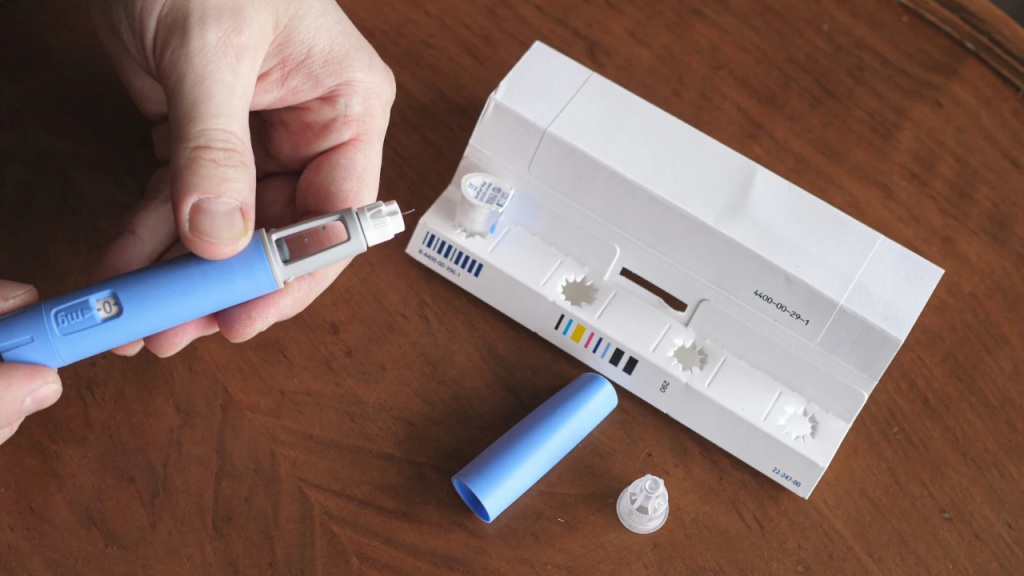
There is no official retatrutide administration process yet. But since it is a weekly weight loss injection, its administration process may likely be similar to other licensed weekly weight loss injections.
Here is how retatrutide might be taken (if it gets approved):
- Choose your injection day and stick to it as you will have to take injection on the same day every week.
- Wash your hands to prevent injection site infection risk.
- Clean the injection site with an alcohol swab. Subcutaneous injections like retatrutide are administered in abdomen, thigh, or upper arm.
- Prepare the injection and inject it straight into the skin at a 90 degrees angle.
- Dispose of needle or pen in an appropriate sharps disposal container.
Retatrutide side effects reported in trials
Retatrutides is documented as a well-tolerated medication. However, it can still cause some side effects in some individuals. These side effects are more common at higher doses and may occur more frequently after gradual dose escalation. They often improve over time as the body adjusts to the medication.
Common reported side effects of retatrutide are:
- Gastrointestinal-related (such as nausea, vomiting, constipation, diarrhea)
- Mild fatigue
- Heart rate increase
- Skin burning, tingling or sensitivity
Wrapping it up
Retatrutide is a once weekly subcutaneous injection that targets three different hormone receptors in the body. However, it is still undergoing clinical trials. Therefore, no official retatrutide dosage is available so far.
According to the dosing schedules tested in clinical trials, 2 mg is the starting dose while 12 mg is the maximum dose of retatrutide for obesity treatment. 12 mg produces more significant weight loss compared to lower doses.
Like other medications, retatrutide also causes side effects whose severity and frequency varies depending on the dose.
Retatrutide is an effective drug but it is still being investigated. If you are looking for an approved weight loss treatment, consider licensed medications like Mounjaro. These medicines also produce good results and have been properly reviewed by regulatory agencies.
Contact us today to book appointment with qualified healthcare professionals. Find out which licensed weight reduction solutions are available and start your weight loss journey on time.
FAQs about retatrutide peptide dosage
How often to take retatrutide?
In trials, a retatrutide injection is given once per week.
Can I lose weight on retatrutide starting dose?
Yes, you can. Authorised clinical trials have shown that retatrutide can help reduce body weight, although the amount of weight lost varies by dose.
Can I start on 4mg of retatrutide?
Starting retatrutide on your own is not recommended, as it is an investigational drug, not an approved one. However, if we consider Phase 3 clinical trial data of retatrutide, the starting dose is 2 mg, increasing to 4 mg after 4 weeks.
Does retatrutide cause hair loss?
No, it does not directly cause hair loss. According to the available data, hair loss has not been reported as a side effect of retatrutide.
Does retatrutide make you tired?
Retatrutide may make you tired. Phase 2 trial results showed that approximately 7% of participants receiving retatrutide experienced fatigue.
What is the difference between retatrutide and tirzepatide?
The key difference between these two medications is that:
Tirzepatide (Mounjaro) is a dual agonist, meaning it activates two receptors – Glucose-Dependent Insulinotropic Polypeptide (GIP) and GLP-1 (Glucagon-Like Peptide-1).
Retatrutide is a triple agonist as it activates three receptors – GLP-1, GIP and glucagon receptors.
Another important distinction is that tirzepatide is an approved weight loss treatment in the UK while retatrutide is not an approved treatment yet.
When will retatrutide be available in the UK?
No official launch date for retatrutide has been accounted in the UK. However, it is expected to be available privately by the end of 2027 or early 2028.
Unregulated retatrutide products sold online are unsafe as none of them is tested, verified, or approved. Hence, everyone should stay clear of them.
How is retatrutide dose escalated?
In trials, each retatrutide dose is escalated every 4 weeks. This helps body to adapt gradually to higher doses of once-weekly injection.
How much retatrutide should I take?
Retatrutide is an investigational product, so taking it on your own without medical supervision is highly discouraged. Instead, you should consider its licensed alternatives like Mounjaro that healthcare providers prescribe to suitable candidates for meaningful weight loss.
References
Bellido, V., le Roux, C.W., Ekinci, E.I., Bjornstad, P., Frias, J.P., Giblin, K., Eyde, S., Park, S.Y., Ferro, J., Johnson, C. and Taylor, A., 2026. Retatrutide in adults with obesity and type 2 diabetes (TRIUMPH-2): a double-blind, parallel-group, randomised, placebo-controlled, phase 3 trial. The Lancet.
Matheus, M.H.L., Câmara², L.C., Mattoso, S.O., dos Santos Pereira, S.I., de Aguiar, D.R. and Khan, Z., 2026. Efficacy and Safety of High-Dose Retatrutide in Adults with Obesity and Type 2 Diabetes: A Systematic Review and Bayesian Meta-Analysis. SN Comprehensive Clinical Medicine, 8(1), p.349.
Jastreboff, A.M., Kaplan, L.M., Davies, M.J., Wilding, J.P., Ahmad, N.N., Murray, M., Du, Y., Makarova, N., Giblin, K., Schloot, N.C. and Wang, Y., 2026. Retatrutide, a triple hormone receptor agonist, for treatment of obesity. N Engl J Med.
Evidence Based Research
This article has been researched and written based on scientific evidence and fact sheets that have then been crossed checked by our team of doctors and subject matter experts.
References, sources and studies used alongside our own in-house research have been cited below, most of which contain external clickable links to reviewed scientific paper that contain date stamped evidence.
Our team of healthcare experts and GMC registered doctors are licensed to UK GMC standards. We strive to provide you with the latest evidence based, researched articles that are unbiased, honest and provide you with accurate insights, statistics and helpful information on the discussed topic to ensure you gain a better understanding of the subject. You can read more about our Editorial Process by clicking here.
We value your feedback on our articles, if you have a well-researched paper you would like to share with us please contact us.
Quick Low Testosterone Test
If you know your total testosterone reading from a previous blood test input the results to the left above to see if your testosterone levels are normal.
Low Testosterone Levels
You may have low testosterone depending on the symptoms you have, please contact us to find out how we can help.
Please Retry
The Total Testosterone Level You Entered Is Incorrect. Figure Must be in nmol/L you can use our converter here.
Normal Testosterone Levels
Your testosterone levels appear to be in the normal range.
LOOKING GOOD!
You must be over 38, have had your ovaries removed or have suffered with premature menopause to warrant further hormone tests.
Further investigation needed
Please contact us to discuss your hormones, we need your total testosterone levels to validate your hormone deficiency. You can order a blood test here.
Low Testosterone Levels
You may have low testosterone depending on the symptoms you have, please contact us to find out how we can help.
High Testosterone Levels
You appear to have higher than normal testosterone levels, please contact us for further investigation.
Normal Testosterone Levels
You appear to have normal testosterone levels. Contact us if you have any concerns.
About the Author: Mike Kocsis
 Mike Kocsis has an MBA with a focus on healthcare administration and is an entrepreneur and medical case manager for Balance My Hormones which offers medical services in the UK and Europe. Mike has over 25 years of experience in the healthcare sector, much of that working with people who have hormone imbalances. Mike has appeared on podcasts and radio and is an expert speaker on the subject of hormone imbalance. He specialises in Testosterone Replacement Therapy and Hormone Replacement Therapy (HRT) and with his first-hand experience he has helped thousands of people suffering from low testosterone recover and regain control of their lives. You can follow him on LinkedIn and on the Balance My Hormones YouTube Channel.
Last update: October 23rd, 2026